


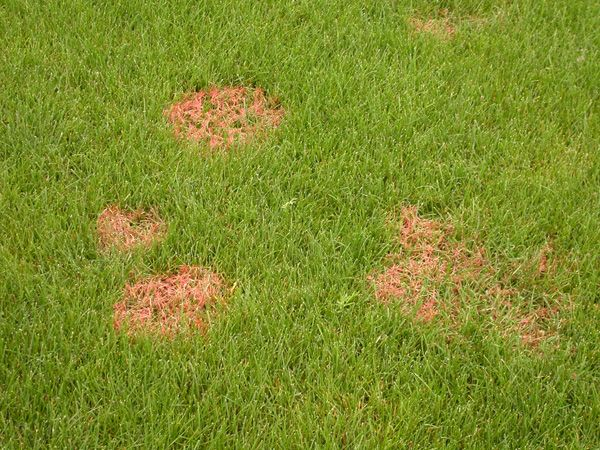
Red Thread Lawn Disease
Red thread is a common fungal disease that affects cool-season lawns, especially in spring and fall. While it’s often associated with low nutrient levels, red thread is more strongly driven by environmental conditions such as prolonged moisture, high humidity, compacted soil, and excessive thatch. Understanding these contributing factors is key to preventing and correcting the problem.
What Does Red Thread Look Like?
Red thread is easy to spot once you know what to look for. Symptoms include:
Irregular patches of tan or pinkish grass
Thin, weak turf that appears slow to recover
Fine, reddish or coral-colored threads extending from grass blades, especially visible in the morning
These “threads” are fungal structures that give the disease its name and spread during damp conditions.
Conditions That Promote Red Thread
Red thread thrives when turf stays wet for extended periods. The most common contributing factors include:
High Humidity & Prolonged Moisture
Frequent rain, heavy dew, and poor air circulation create ideal conditions for fungal growth. Lawns that remain damp overnight are especially vulnerable.
Fluctuating Weather Patterns
Cool nights followed by mild, humid days allow the fungus to persist and spread. Spring and fall weather patterns are prime times for outbreaks.
Thatch Buildup
Excessive thatch holds moisture at the soil surface and restricts airflow, creating a favorable environment for disease development.
Soil Compaction
Compacted soils limit drainage, oxygen, and root development. When water can’t move freely through the soil, moisture lingers—fueling fungal activity.
Is Nitrogen the Cause?
Low nitrogen levels can make grass slower to recover from red thread, but they are rarely the primary cause. Even well-fertilized lawns can develop red thread if environmental conditions are favorable. The disease is more about moisture management and soil health than simple nutrient deficiency.
How Red Thread Is Treated
Managing red thread typically involves a combination of cultural improvements and targeted treatments:
Improving drainage and reducing soil compaction
Dethatching to improve airflow and reduce moisture retention
Adjusting watering practices to avoid prolonged wetness
Applying professional fungicide treatments when necessary
Healthy, well-managed turf often grows out of the disease once conditions improve.
Preventing Red Thread in Your Lawn
Long-term prevention focuses on creating an environment where fungus struggles to survive:
Maintain proper mowing height and frequency
Improve soil structure through aeration
Reduce thatch buildup
Encourage deep root growth and better airflow
Professional Help Makes the Difference
Because red thread is closely tied to environmental and soil conditions, proper diagnosis and treatment are important. A professional lawn care program addresses the underlying causes—not just the symptoms—helping your lawn recover faster and stay healthier throughout the season.